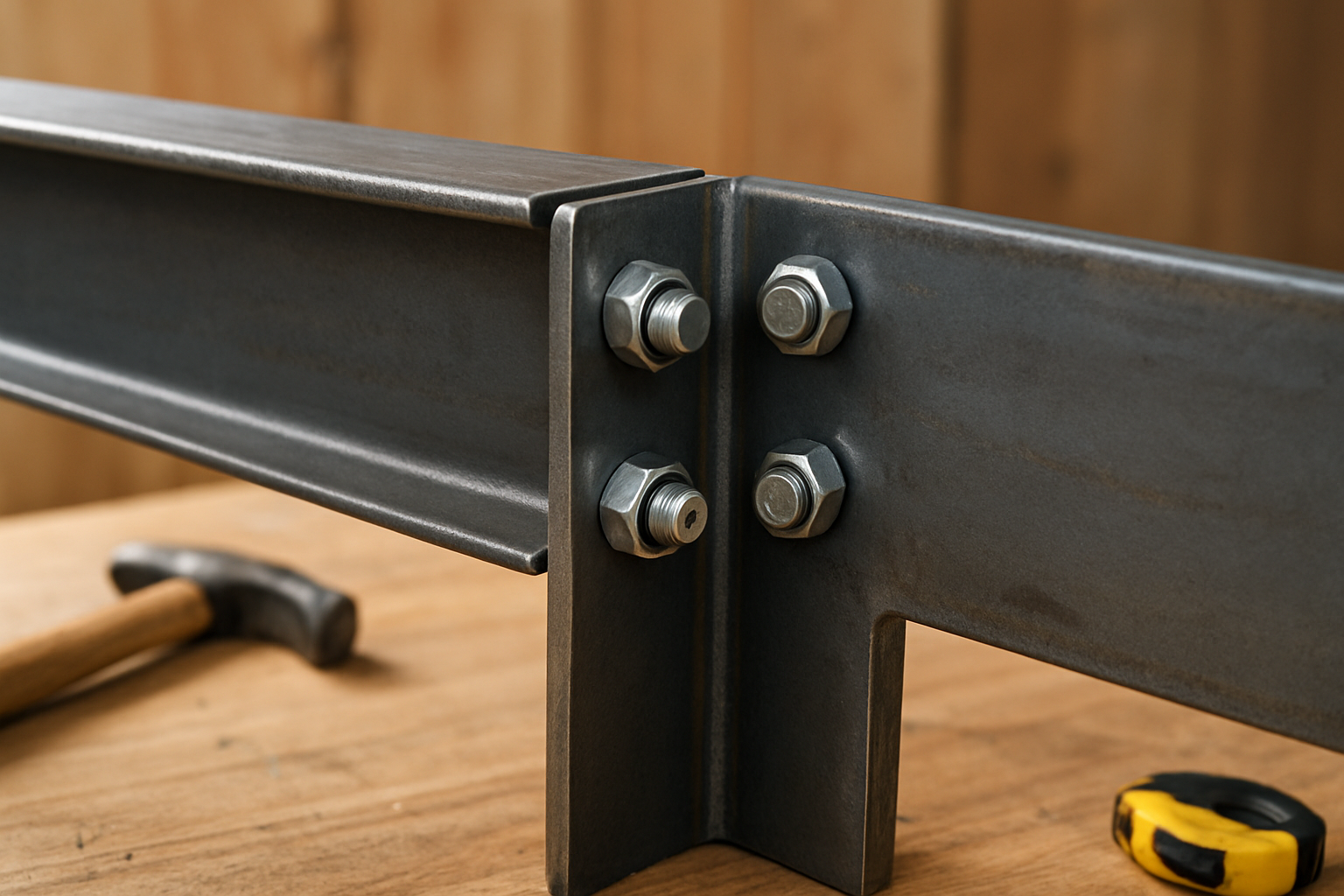

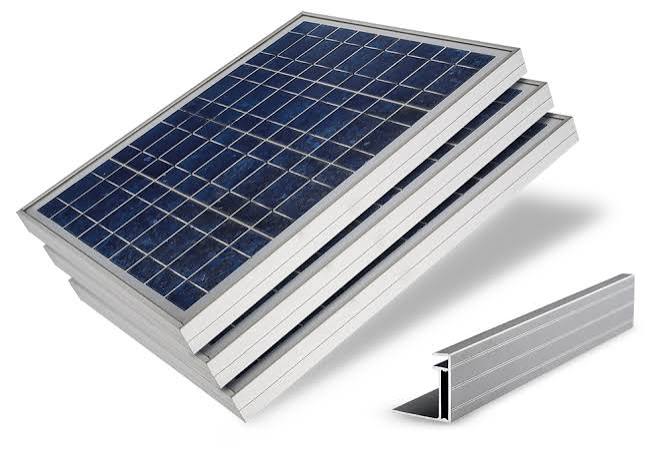
Before you request quotes, write the frame into your RFQ line by line. Solar module frame thickness, profile, alloy, finish and load rating decide how a module survives wind and snow and how it mounts.
Leave those lines out and the quotes come back in different shapes. Supplier A prices a heavier profile. Supplier B quotes a lighter one with a thinner finish. Another writes back asking which clamp zone you plan to use, which your RFQ should have answered up front.
You can’t line those quotes up side by side, so the cheapest price on the sheet tells you very little. A frame problem also rarely shows up until the modules are on the structure. The fix is a frame spec you write before any quote and send to every supplier unchanged.
What the frame controls in a module
The module frame is the aluminium border that holds the glass laminate and carries load into the mounting structure. The frame controls stiffness, clamp fit, corrosion life and where the bolts go, so each property you leave unstated becomes the supplier’s choice.
You might buy frames on their own for an assembly line. Or the frame might be a line inside the wider process of importing solar modules into India. Either way, the same properties decide what happens at site.
Profile and thickness
Profile is the cross-section shape of the frame, the outline you’d see if you sawed through it. Wall thickness is how thick the aluminium is at each part of that shape.
Profile and wall thickness together set how stiff the frame is under load. A deeper profile or thicker wall usually flexes less when wind or snow pushes on the glass. Less flex means less stress on the cells inside.
Clamps grip a frame of a set height and lip, so a change in profile or thickness can leave them loose or overtight. We won’t give you a solar module frame thickness to use here. The right figure depends on your structure, your site loads and the supplier’s datasheet.
Alloy and anodizing
Alloy is the mix of aluminium and other metals in the frame. Temper is the heat treatment that sets its hardness, and the pair decides how strong the frame is under clamps and bolts.
Anodizing is a process that grows a hard oxide layer on the aluminium surface. That layer resists corrosion, which is why so many RFQs ask for an anodized aluminium solar frame by default.
Coating thickness matters most near the coast or on humid sites. Salt air and damp go to work on any thin spot. So write solar frame corrosion resistance into the spec as a stated finish and coating thickness, backed by a test report.
When a supplier offers a finish other than anodizing, ask for the test data behind it. Without that, you can’t rank it fairly. Treat the solar panel frame material and its finish as a pair when you compare.
Load rating and mounting fit
Load rating is the mechanical load a module is tested to withstand, on the front and on the rear. The frame and its mounting points decide whether that rating still holds once the module sits on your structure.
A frame that doesn’t match your clamps or rails changes how load travels from the glass into the structure. The module can then flex more on your structure than it did in the test. You find out at site, through cracked cells or clamps working loose.
Reading a solar frame load rating
A solar frame load rating has two parts to check. Front load is the push of snow and downward pressure on the glass. Rear load is wind lifting the module.
Every rating is tied to the mounting method used in the test. That means the clamp type, where the clamps sat along the frame, or which bolt holes carried the load. Mount the module another way and the stated figure stops describing your installation.
So read the test report behind the datasheet figure. Ask for the report that names the mounting method, and check it against the certifications and test reports a solar module needs in India. If a supplier quotes a solar frame load rating with no method attached, treat it as unproven.
Matching holes and clamps to your structure
Mounting holes are the bolt points in the frame, and their positions have to line up with your rails. If they don’t, your installer drills new ones at site and damages the finish around them.
Clamp zones are the stretches of frame where the module maker allows clamps to sit. Clamp outside them and you may be outside the tested load case. Drainage holes let water out. Without them, water sits inside the frame.
A hole mismatch tends to surface on the roof, after the container is unloaded and the installer lifts the first module onto the rail. Then you’re paying for rework, or arguing with the supplier about whose drawing was right.
What to write into your RFQ
Your RFQ should turn every frame property above into a written line, with a matching request for evidence. Send the same lines to every supplier and the quotes come back in a shape you can compare.
The table below sets out the core of a solar frame RFQ specification. Fill in the ‘What to state’ column from drawings and datasheets your technical lead trusts.
Spec fields to include
Each row covers a spec field, what you state, why it matters and the evidence to ask for. Leave a field blank and the supplier fills it with whatever suits their production line.
Certification is a separate check. Before you decide which certificates to request for frames bought on their own, read up on which solar components need BIS certification.
If the frame comes inside a full module order, the same fields still apply. Add them to the module spec when sourcing complete solar modules, so the frame isn’t left to the module maker’s default.
Questions to ask each supplier
The questions below expose weak answers quickly. Send them with the spec and ask for replies in writing.
– Ask which test reports cover this exact frame profile and mounting method.
– Ask what tolerance they hold on wall thickness, and how they measure it.
– Ask whether the solar panel frame material is certified per batch, and ask to see a recent certificate.
– Ask how they check coating thickness on each anodized aluminium solar frame before packing.
– Ask what changes in price, load rating and test cover if they substitute a profile.
A supplier who answers with a test report and a batch certificate has tested this frame. One who sends a brochure may not have.
Asking has a cost, and you should weigh it. A tight solar frame RFQ specification can raise the unit price and shrink the pool of suppliers willing to quote. A loose spec costs you later, in frames that fail at site or a warranty claim you can’t win.
Set the tightness to match your sites. A coastal project earns a stricter line on solar frame corrosion resistance than a dry inland one. Once the spec is set, move on to finding approved module suppliers who can meet it.
How VyaparCred handles frame sourcing
VyaparCred is a marketplace and Procurement-as-a-Service platform for importers of solar and EV supply chain products in India. You can use it to send a structured frame RFQ to suppliers and get their answers back against the same fields. The RFQ is yours, written from your own drawings and site needs.
Structured here means the spec lines and supplier questions above, set out the same way for every supplier. A gap in a supplier’s answer then shows up on the sheet, before you commit to an order. If you’re looking for a solar frame supplier, you can start from the frames page and attach your own spec.
VyaparCred doesn’t make frames, and the platform won’t pick your thickness or finish for you. Those calls belong to your technical lead, who signs off the bill of materials. Your team still owns the final choice of supplier and the commercial terms.
Frame spec fields for your RFQ
| Spec field | What to state | Why it matters | Evidence to request |
|---|---|---|---|
| Profile drawing | A dimensioned cross-section drawing of the frame | Sets stiffness and clamp fit | Signed supplier drawing marked with its revision |
| Wall thickness and tolerance | Nominal wall thickness and the tolerance you accept | Thin walls flex more under load | Measurement records from production samples |
| Alloy and temper | The alloy and temper your engineer approves | Sets strength under clamps and bolts | Batch material certificate |
| Finish type and coating thickness | Finish type and the minimum coating thickness | Drives corrosion life, most of all on coastal or humid sites | Coating thickness test report |
| Load rating and test method | Front and rear load required, with the mounting method | A rating only holds for the method it was tested with | Mechanical load test report naming the mounting method |
| Hole positions | Mounting and drainage hole positions on the drawing | Holes must line up with your rails and let water out | Drawing checked against your structure layout |
| Corner joint and sealing method | How corners are joined and how the laminate is sealed in | Weak corners or seals let water in and loosen the frame | Process description and sample photos |
| Packing | Packing method and protection for edges and finish | A scratched finish loses protection before install | Packing specification and photos |
| Test reports | Which reports must cover this exact frame | Reports for a similar frame don’t cover yours | Copies of each report naming the frame profile |
Your next step is a single RFQ sheet for frames. Copy the spec lines from the table, fill in your own values, and paste the supplier questions underneath.
Send that same sheet, unchanged, to every supplier on your shortlist. If one asks to quote against their own drawing, ask them to fill in your sheet first. When the sheet is ready, use the contact or app buttons on this page to send it through VyaparCred.
— FAQ: Frame specs importers ask about before ordering —
- How thick should a solar panel frame be?
There’s no single right figure, and any supplier quoting one without context is guessing. Solar module frame thickness should come from the load rating your site needs, the profile shape and the alloy. Ask your technical lead to set a minimum wall thickness from your drawings, then make suppliers confirm it in writing with a measured sample.
- Is anodized aluminium better for solar frames?
For most sites, yes. An anodized aluminium solar frame has a hard oxide layer that slows corrosion and resists scratches during handling. The catch is that coating quality varies a lot between suppliers. Specify the anodizing finish and coating thickness you need, and ask for the test report rather than a datasheet claim.
- What load rating should I ask for on solar modules?
Ask for the front and rear load your site will put on the module, mostly from wind and, in hill states, snow. Your structural engineer should set that figure. Then require a test report showing the module passed at that load, mounted the way you’ll mount it. A solar frame load rating tested on different clamps tells you less.
- What should a solar frame RFQ include?
A solar frame RFQ specification should list the profile drawing, wall thickness, alloy and temper, anodizing finish, load rating, hole positions and sealing method. Pair each line with the evidence you want, such as a test report or sample. Also state quantity, packing and delivery port, so quotes cover the same scope.
- Why do solar frames corrode near the coast?
Salt in coastal air settles on the frame and attacks any spot where the coating is thin, scratched or cut. Corrosion often starts at drilled holes and where the frame meets steel fasteners. To improve solar frame corrosion resistance, specify the anodizing finish, ask for salt spray test results and avoid mixing metals at the clamps.